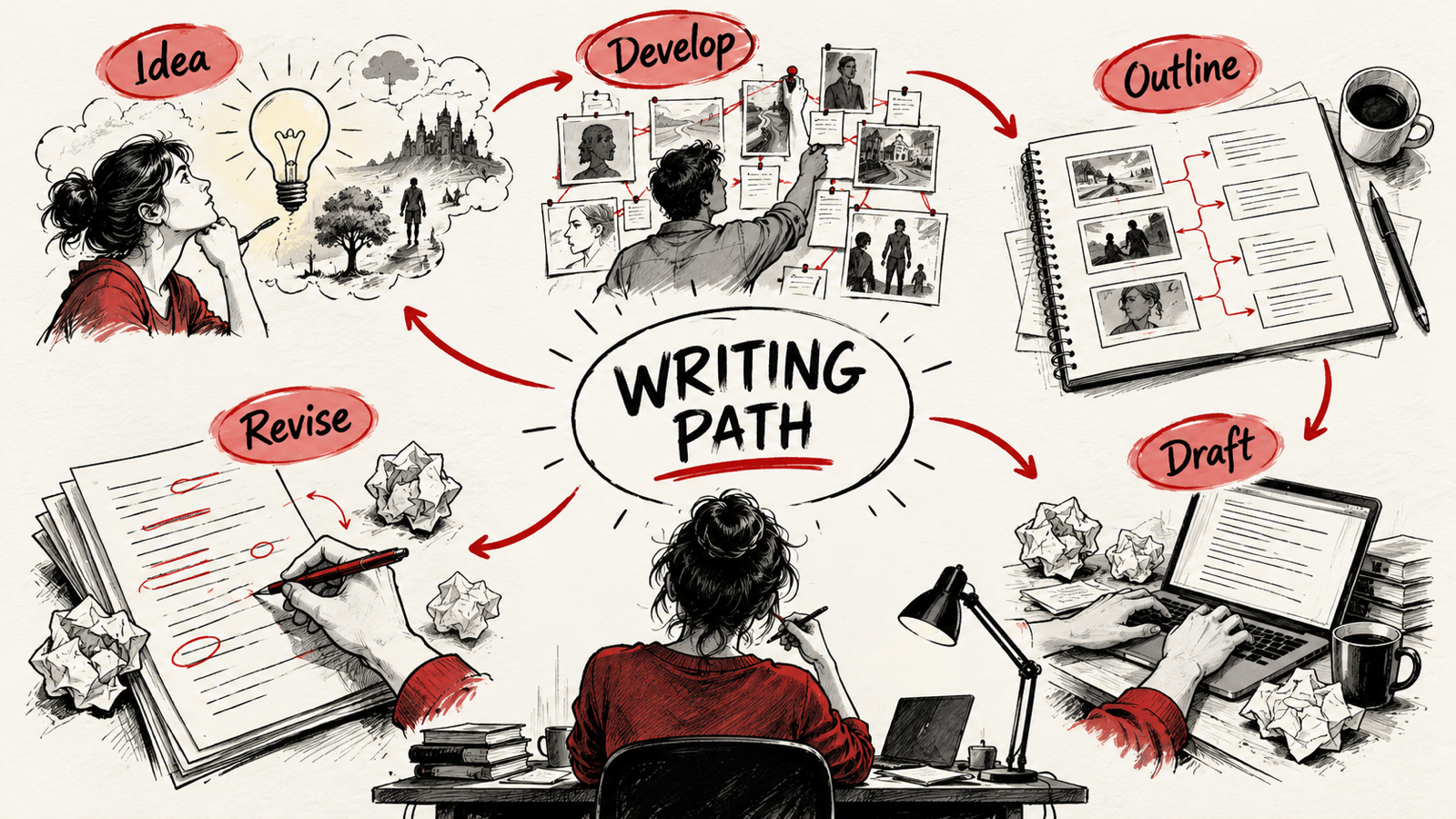
A 14-Day Screenplay Drafting Plan: From Idea to Revision
A 14-day screenplay plan divides development, outlining, drafting, and revision into daily outcomes. Define the concept and characters first, build a beat.
By My Logline Editorial
A 14-day screenplay plan divides development, outlining, drafting, and revision into daily outcomes. Define the concept and characters first, build a beat sheet and scene list, then draft and revise in focused passes. The schedule is a working challenge, not a guarantee; adapt page targets and scope to the project and available time.
Key takeaways
-
Prepare the concept and scene list before the drafting sprint.
-
Define a minimum useful outcome for each day.
-
Separate structural revision, dialogue revision, and final polish.
-
Base idea
-
Genre
-
Tone
-
Language
-
Target runtime
-
Inspiration films (optional)
-
Budget level
-
My strengths/weaknesses as a writer
Your response must be practical, structured, and execution-focused.
How do you use task 1 — analyze the idea?
Break down the idea and explain:
- Core emotional engine
- Central conflict
- Biggest strengths
- Biggest weaknesses
- Clichés to avoid
- Genre expectations
- What makes the idea unique
Then rate:
- Originality (/10)
- Emotional impact (/10)
- Production feasibility (/10)
Then suggest:
- 3 ways to improve the concept
- 3 possible endings

- 3 hidden themes the story can explore
How do you use task 2 — create a 14-day screenplay plan?
Create a strict day-by-day roadmap. For each day include:
- Main goal
- Expected output
- Writing target
- Key questions to solve
- Common mistakes to avoid
How do you use the 14-day structure?
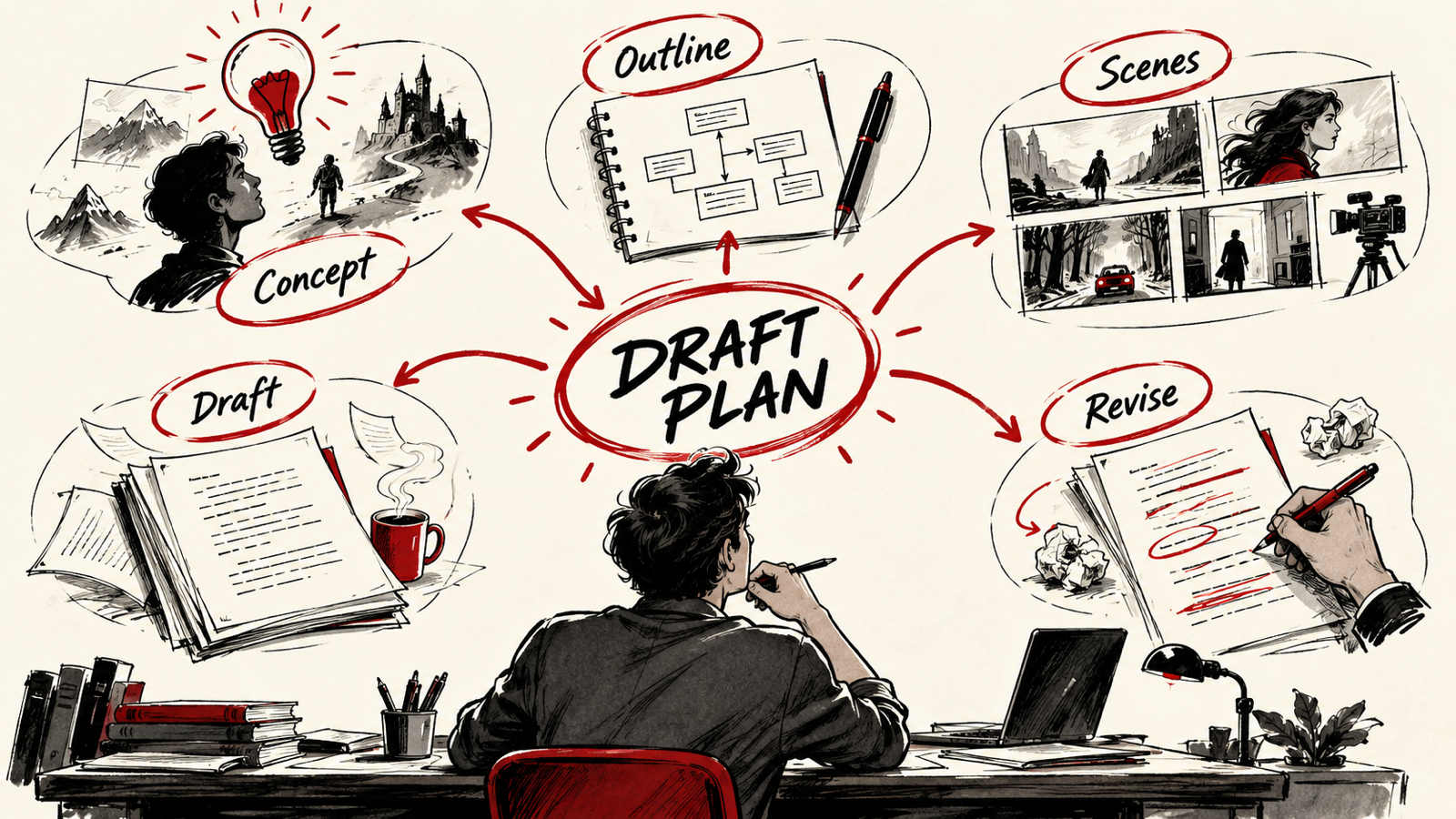
Day 1 — Core Concept
Logline, theme, genre promise, story engine.
Day 2 — Characters
Protagonist, antagonist, emotional wounds, desires vs needs.
Day 3 — World & Tone
Setting, atmosphere, cinematic identity.
Day 4 — Story Structure
Use How to Turn a Story Idea into a Complete Movie Outline to test the opening, midpoint, emotional low point, and climax before locking the plan. Choose turning points that change the protagonist’s situation rather than simply adding events.
Beginning, midpoint, climax, ending, twists.
Day 5 — Beat Sheet
Major story beats and turning points.
Day 6 — Scene List
Scene-by-scene breakdown with purpose and conflict.
Day 7 — Dialogue & Voice
Character speaking styles, subtext, silence, memorable lines.
Days 8–11 — First Draft Sprint
If you are planning a feature, use How to Plan a Two-Hour Screenplay: Acts, Beats and Pacing to estimate the size of each act and set workable page targets. Keep those estimates flexible enough to serve the story while maintaining daily momentum.
Daily page targets and momentum-focused writing advice.
Day 12 — Rewrite Pass 1
Structure, pacing, emotional consistency.
Day 13 — Rewrite Pass 2
Dialogue, tension, visual storytelling.
Day 14 — Final Polish
Opening pages, ending impact, readability, final cleanup.
How do you use task 3 — writer execution system?
When a day stalls, use a specific exercise from How to Overcome Screenwriter’s Block with Five AI Exercises: generate a few openings, break the next task into smaller steps, or explore alternatives for a blocked scene. Pick a direction and return to the draft.

For every day include:
- Minimum win condition
- If stuck, do this
- What NOT to waste time on
Also explain:
- What emotional struggles usually happen during each phase
- How to avoid overthinking and perfectionism
- How to keep momentum even when motivation drops
How do you use important rules?
- Be brutally practical.
- Focus on execution, not theory.
- Prioritize finishing over perfection.
- Think like a working screenwriter under deadline.
- Keep the advice actionable and specific.
End with:
- Biggest danger for this script
- Biggest strength of the idea
- One thing the writer must focus on
- A final push to finish the screenplay
Finally say: “Now give me your basic idea.”
Frequently asked questions
Can a beginner finish a polished film script in two weeks?
Two weeks may produce a draft or substantial progress, depending on experience, preparation, scope, and available hours. A production-ready screenplay may need additional development, feedback, and revisions.
What should I do if I miss a day?
Reassess the remaining work, reduce the next task to a useful minimum, and revise the schedule. Preserve forward progress rather than rushing past unresolved story decisions simply to match the calendar.
Summary
Prepare the concept and scene list before the drafting sprint. Define a minimum useful outcome for each day. Separate structural revision, dialogue revision, and final polish.
Use My Logline to write your film.