How to Plan a Two-Hour Screenplay: Acts, Beats and Pacing
Plan a two-hour screenplay by mapping the protagonist’s journey across setup, confrontation, and resolution, then turning major beats into scenes. A.
By My Logline Editorial
Plan a two-hour screenplay by mapping the protagonist’s journey across setup, confrontation, and resolution, then turning major beats into scenes. A 120-page outline can be a useful starting model, but page count does not measure runtime exactly. Adjust the plan for performance, action, genre, and the story’s emotional rhythm.
Key takeaways
- Treat page targets as estimates rather than fixed rules.
- Connect major beats to choices, stakes, and change.
- Review pacing at both scene and whole-story level.
If the page ranges feel abstract, first build your turning points with How to Turn a Story Idea into a Complete Movie Outline. Then place those events on the runtime plan so the outline grows from your character’s journey.
| Act | Pages | Runtime | % of Script | Purpose |
|---|---|---|---|---|
| Act 1: Setup | 1–30 | 0–30 min | 25% | Establish protagonist, world, inciting incident, act break |
| Act 2: Confrontation | 31–90 | 30–90 min | 50% | Rising action, midpoint, betrayal, lowest point |
| Act 3: Resolution | 91–120 | 90–120 min | 25% | Climax, fallout, coda |
What should you know about 15-Beat "Save the Cat" Breakdown (Perfect for 120 Pages)?
| Beat | Page | What Happens |
|---|---|---|
| 1. Opening Image | 1 | Visual snapshot of protagonist's ordinary world |
| 2. Theme Stated | 5 | Someone hints at the story's lesson |
| 3. Set-Up | 1–10 | Introduce characters, flaws, wants, world |
| 4. Catalyst (Inciting Incident) | 12–15 | Life-changing event disrupts ordinary world . |
| 5. Debate | 15–25 | Protagonist hesitates before committing |
| 6. Break into Act 2 | 25–30 | Protagonist chooses the journey; no turning back . |
| 7. B Story | ~30 | Supporting relationship/subplot begins |
| 8. Fun & Games | 30–55 | Genre promise—comedy gags, thriller chases, romance tension . |
| 9. Midpoint | ~60 | False victory/defeat; stakes rise dramatically . |
| 10. Bad Guys Close In | 60–75 | Antagonist gains ground; internal/external pressure |
| 11. All Is Lost | ~75–90 | Lowest point; "whiff of death"Hope seems gone . |
| 12. Dark Night of the Soul | 90–95 | Protagonist hits rock bottom, reflects |
| 13. Break into Act 3 | 95–100 | Protagonist discovers solution/lesson |
| 14. Climax | 100–115 | Final showdown; protagonist applies lesson |
| 15. Final Image | 120 | Contrast with Opening Image—shows transformation |
Tip: Analyse this for any favourite film of yours to get a better idea.
How should pacing change with the genre?
| Genre | Structural Focus | Key Timing |
|---|---|---|
| Comedy | Premise-driven gags; character learns lesson | Fun & Games (30–55) packed with jokes; climax resolves relationship . |
| Thriller/Mystery | Escalating tension; clue placement | Inciting incident by p.15; ticking clock from midpoint; revelation at climax . |
| Horror | Dread-building; scare pacing | Threat introduced by p.20; escalating encounters; horror confrontation at climax |
| Romance | Attraction→Conflict→Reunion | Meet-cute by p.10; forced separation at midpoint; reunion at climax |
| Drama | Character arc-driven; high stakes | Every scene must advance plot/character; no formulaic beats . |
| Action | Set pieces; clear hero's journey | Hero's Journey beats; more action description; climax = big battle . |
| Fantasy/Sci-Fi | World-building integration | Gradual world reveal; hero's journey; climax convergence |
.
How do you turn the runtime plan into writing tasks?

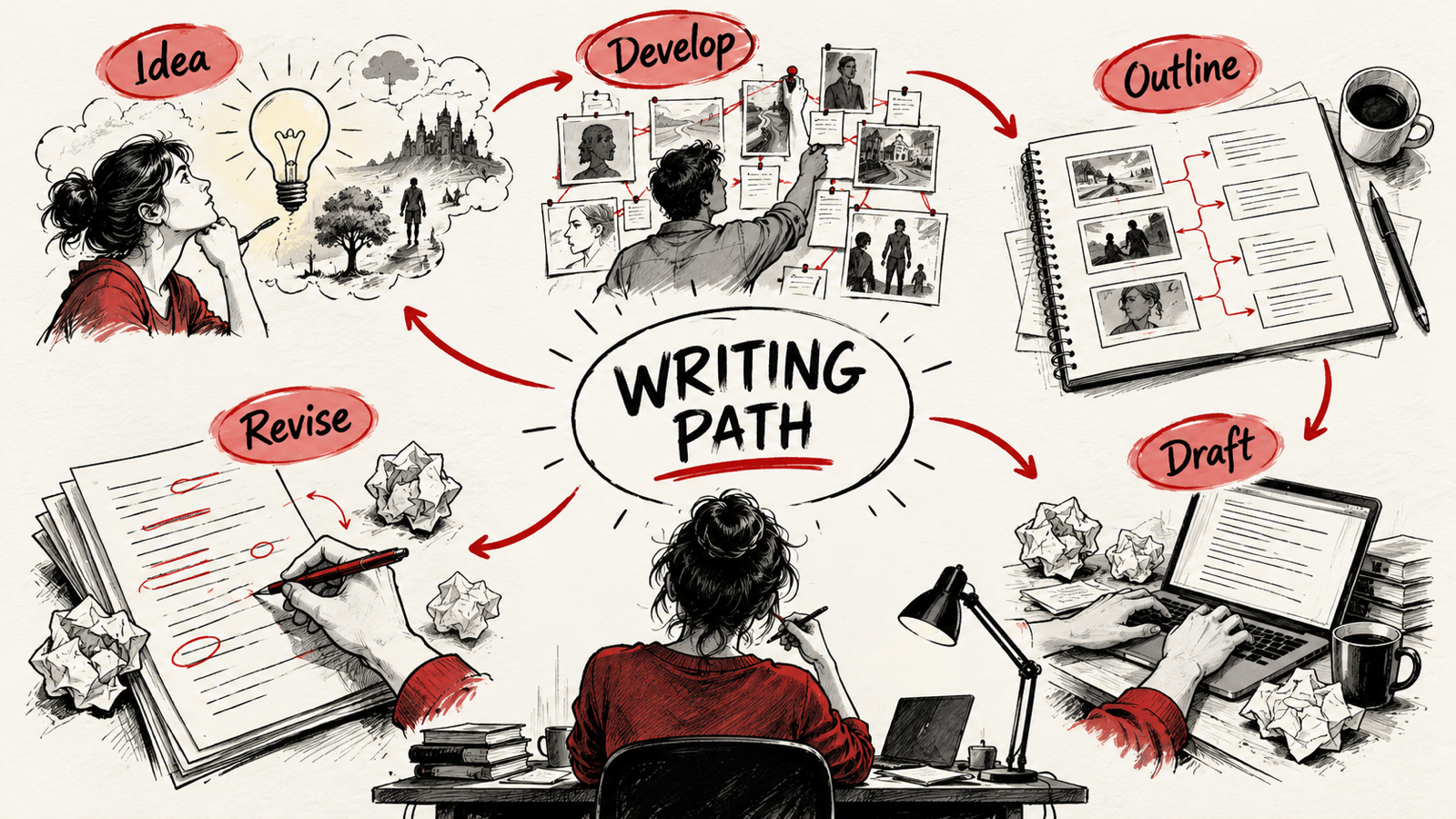
Turn this planning process into daily work with A 14-Day Screenplay Drafting Plan: From Idea to Revision. Use its outline and scene-list stages to decide what you will complete before beginning the draft.
What should you know about pre-Writing (Concept → Outline)?
- Create your story concept (one-sentence logline)
- Develop characters (protagonist's want, flaw, need).
- Write a 1-page synopsis (beginning, middle, end)
- Create a beat sheet (15 beats above)
- Break into scene list (40 strong beats/scenes)
What should you know about writing the Draft?
- Use 12pt Courier font, standard margins
- Scene heading format: EXT. LOCATION – DAY
- Write in present tense.
- Don't edit while writing—let ideas flow
What should you know about pacing Checklist?
- First 5 pages: Hook the reader immediately.
- Page 15: Inciting incident (not past page 20).
- Page 30: Act 1 break (protagonist chooses journey).
- Page 60: Midpoint (stakes escalate).
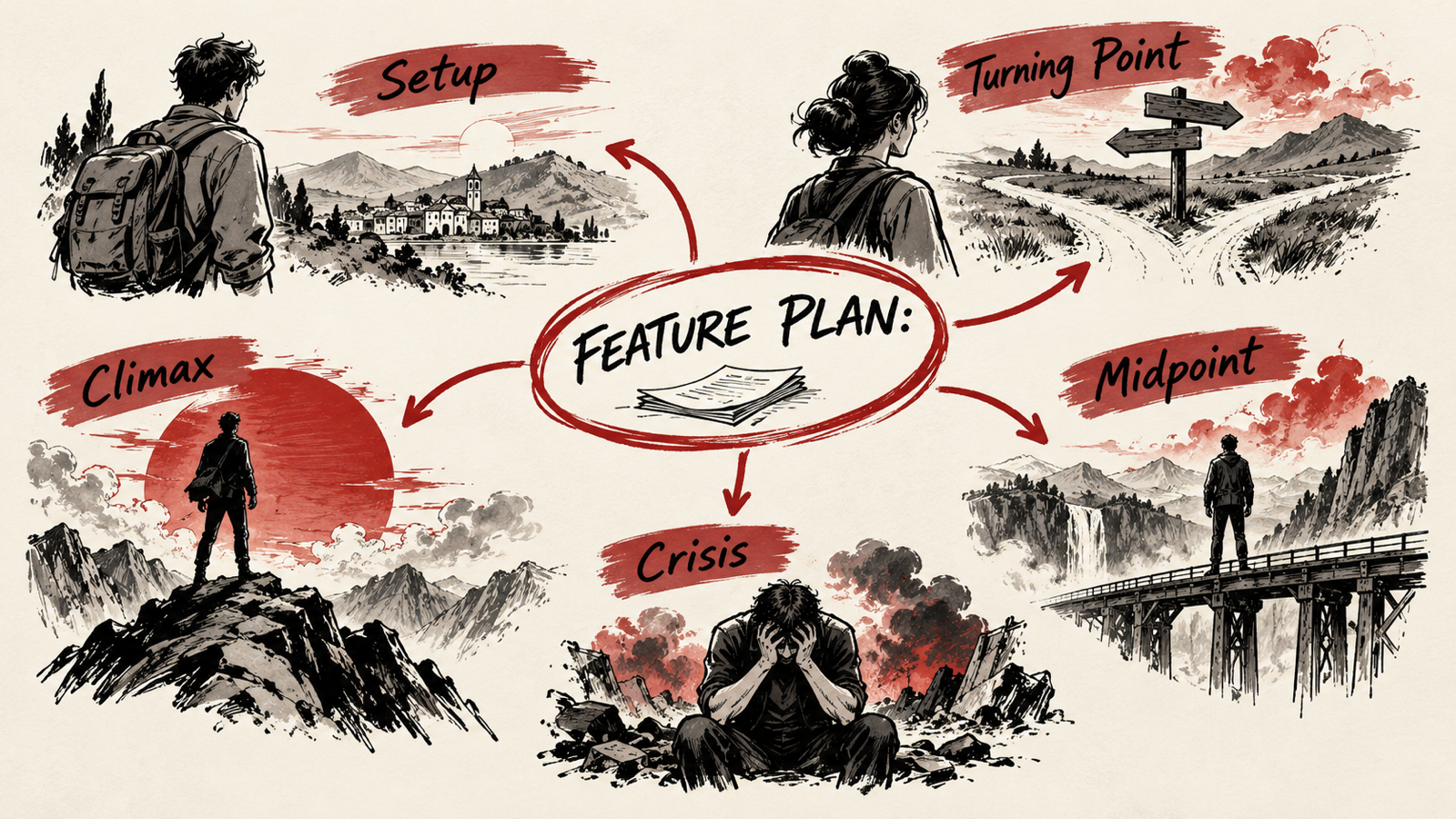
- Page 90: All is lost (lowest point).
- Pages 100–115: Climax sequence
- Page 120: Final image (show transformation)
What should you know about revision?
As you review the pages, apply How to Improve Film Storytelling: 15 Practical Techniques to the scenes themselves. Check whether each scene contains a clear want, an obstacle, and a change that earns its place in the runtime.
- Take a break before editing.
- Check each scene advances plot OR character.
- Ensure genre expectations are met (genre = why audience shows up; structure = why they stay)
- Review the script’s length and aim for under 120 pageswhen that scope fits the story and the recipient’s requirements.
What does a working 120-page plan look like?
ACT 1 (pp. 1–30) - Opening Image (p.1) - Set-up: Protagonist's world + flaw (pp. 1–10) - Catalyst (p. 12–15) - Debate (pp. 15–25) - Break into Act 2 (p. 25–30)
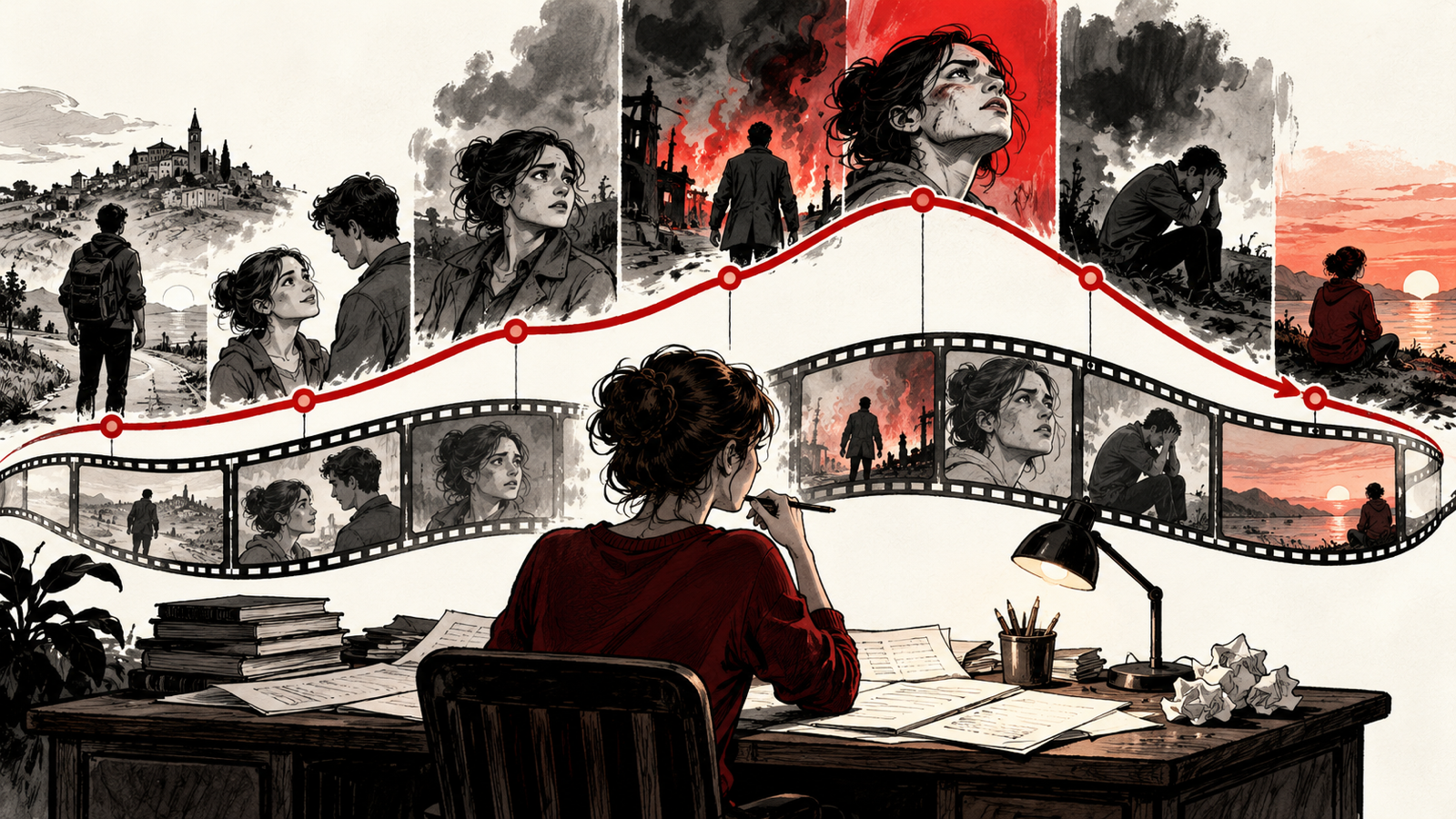
ACT 2 (pp. 31–90) - B Story begins (p. 30) - Fun & Games / Genre promise (pp. 30–55) - Midpoint (p. 60) - Bad Guys Close In (pp. 60–75) - All Is Lost (p. 75–90) - Dark Night of the Soul (pp. 90–95)
ACT 3 (pp. 91–120) - Break into Act 3 (pp. 95–100) - Climax (pp. 100–115) - Final Image (p. 120)
Key principle: Structure reveals character and plot; genre sets audience expectations. Study your genre's conventions but don't let gags/events replace story. The 3-act structure works because it creates a compelling trajectory with highs, lows, complications, and transformation
Frequently asked questions
Does one screenplay page always equal one minute?
No. It is a rough planning convention. Dialogue, action, performance, pauses, formatting, and editing can make a page play faster or slower.
Must every feature script have exactly 120 pages?
No. Appropriate length depends on the story, format, recipient’s requirements, and practical production considerations. Use a page plan to evaluate scope rather than treating it as a universal limit.
Summary
Treat page targets as estimates rather than fixed rules. Connect major beats to choices, stakes, and change. Review pacing at both scene and whole-story level.
Use My Logline to write your film.