Screenplay Structure Explained: Three Acts, Story Beats and Character Change
Screenplay structure organises a character’s pursuit, the resistance they meet, and the consequences of their choices. The three-act model, Save the Cat.
By My Logline Editorial
Screenplay structure organises a character’s pursuit, the resistance they meet, and the consequences of their choices. The three-act model, Save the Cat beats, story circle, and Hero’s Journey offer different planning questions. Use a framework to clarify dramatic change while screenplay format makes the resulting scenes easy for collaborators to read.
Key takeaways
- Separate screenplay formatting from story structure.
- Use frameworks as diagnostic tools rather than rigid rules.
- Connect turning points to the protagonist’s choices and change.
How do you approach screenplay format?
A screenplay describes what we can see and hear. Use scene headings to establish interior or exterior, location, and time. Write action in present tense, introduce character names clearly, and separate dialogue from action. Parentheticals can clarify delivery when needed; transitions and scene numbers serve specific purposes and should be used deliberately.
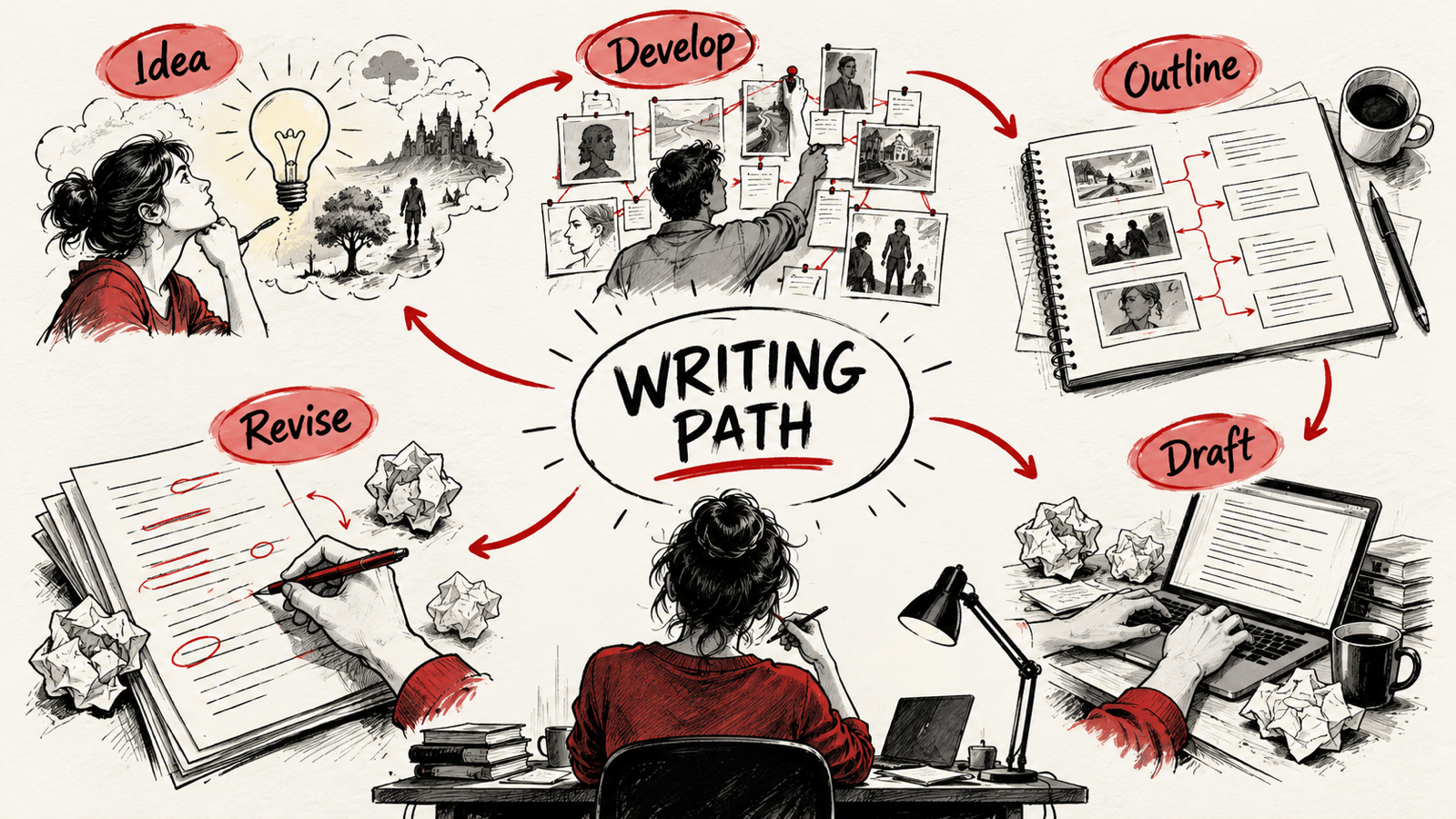
A practical starting point is screenplay software, 12-point Courier, and standard margins. Its page-to-minute relationship is a rough planning convention, not an exact timing rule. Think of the hierarchy as acts, sequences, scenes, and beats: the larger movement contains smaller units of action. How to Write Your First Screenplay: A Nine-Step Development Process shows how to develop those units from an idea through a finished draft.
What is the three-act structure?
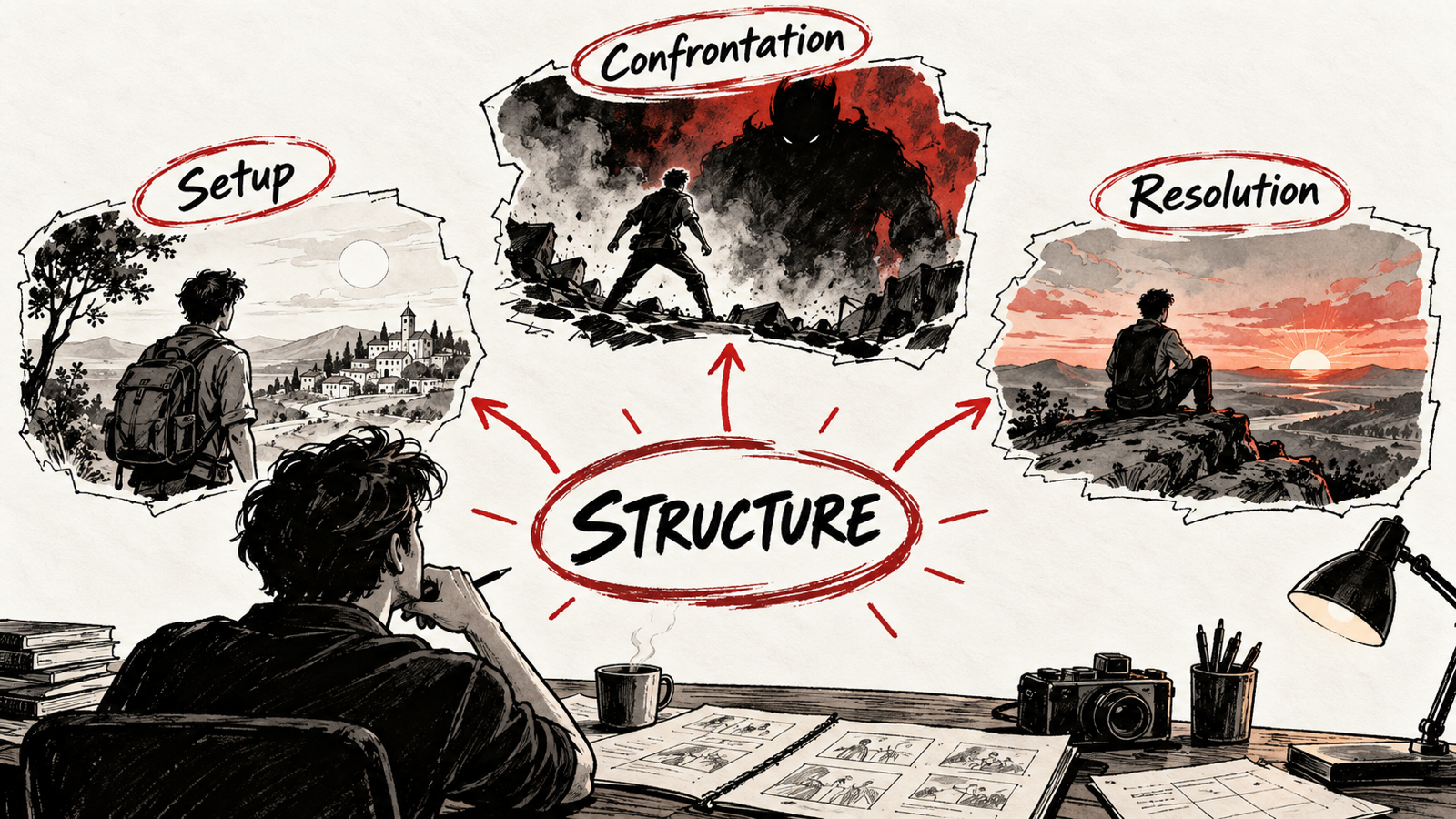
Act I establishes the protagonist, ordinary world, and central problem. An inciting incident disrupts that world. Act II develops the struggle through obstacles, choices, complications, and increasing stakes. A midpoint changes the direction or meaning of the journey. Act III brings the central conflict to a climax and shows the consequences.
Use approximately 25%, 50%, and 25% for these movements. Treat the proportions as a working guide. How to Plan a Two-Hour Screenplay: Acts, Beats and Pacing explores how such landmarks can help you plan a feature’s scope.
How do you approach save the cat?
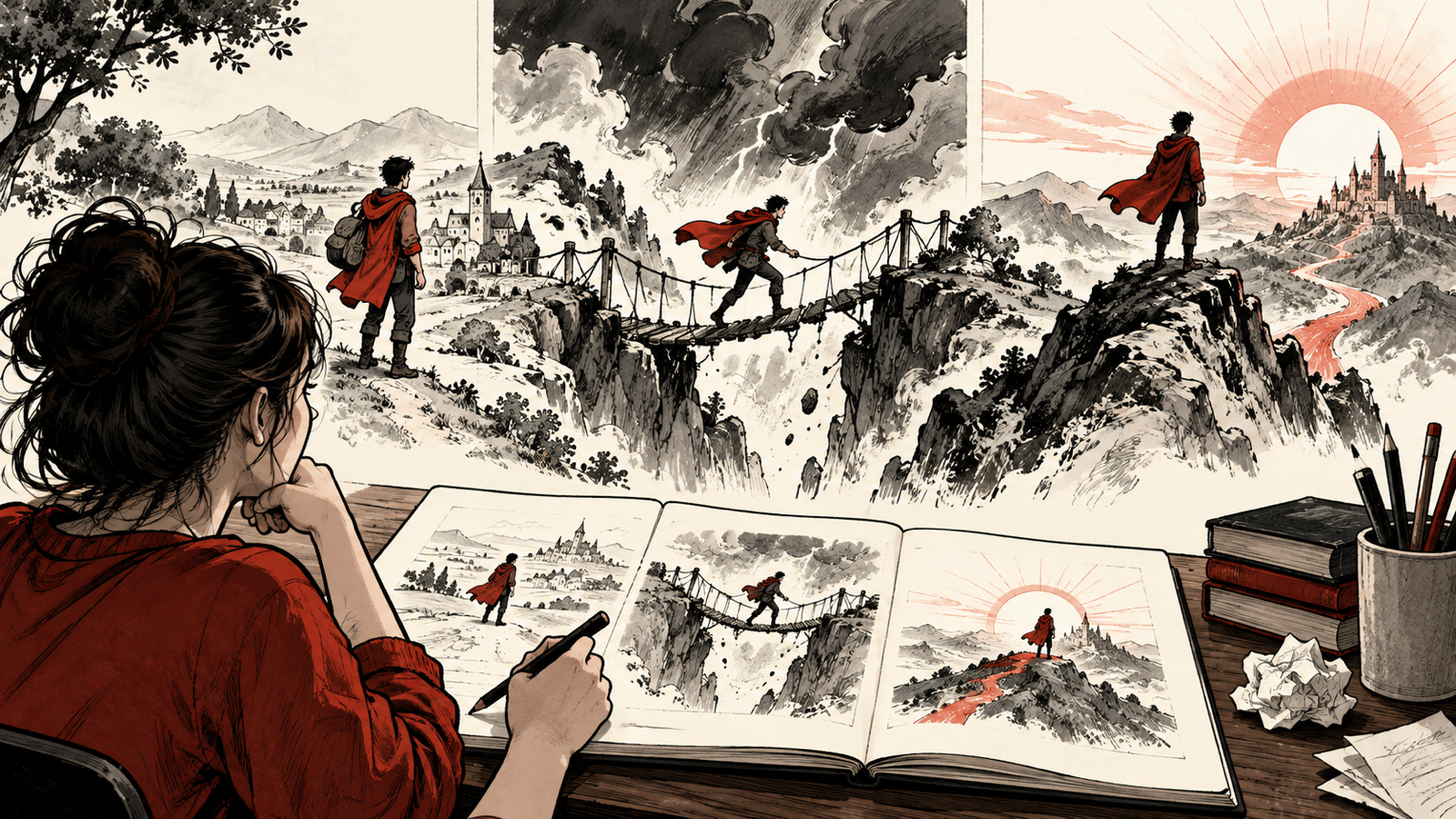
The framework moves through Opening Image, Theme Stated, Set-Up, Catalyst, Debate, Break into Two, B Story, Fun and Games, Midpoint, Bad Guys Close In, All Is Lost, Dark Night of the Soul, Break into Three, Finale, and Final Image. Use the beats to ask what changes and why. The final image can reveal how different life has become since the opening.
What is the seven basic plots?
Consider Christopher Booker’s seven patterns: Overcoming the Monster, Rags to Riches, The Quest, Voyage and Return, Comedy, Tragedy, and Rebirth. Each describes a broad journey. Comedy here includes movement from confusion toward harmony; rebirth centres on renewal. A pattern gives you questions to explore rather than a finished plot.
How do you approach rashomon?
Different characters describe the same event through their fears, memories, interests, and beliefs. Contradictions reveal character and complicate the audience’s idea of truth. Make each account meaningful, give its teller a distinct perspective, and decide what remains uncertain.
What should you know about dan Harmon’s story circle?
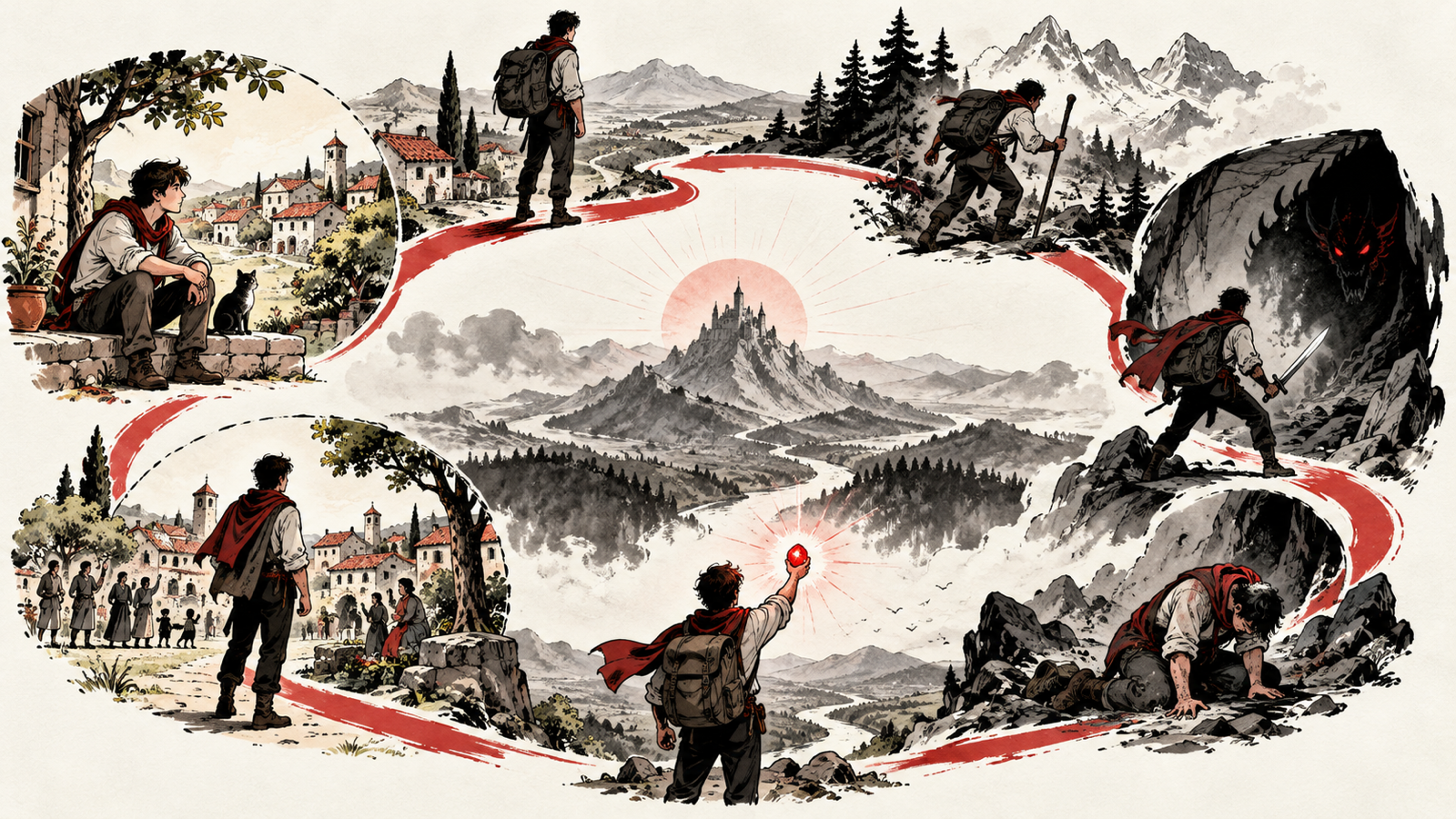
The eight movements are You, Need, Go, Search, Find, Take, Return, and Change. A character leaves a familiar situation, pursues something, pays a price, and returns transformed. That price makes the journey emotionally significant.
What is the Hero’s Journey?
The post follows twelve stages: Ordinary World, Call to Adventure, Refusal, Meeting the Mentor, Crossing the Threshold, Tests/Allies/Enemies, Approach, Ordeal, Reward, Road Back, Resurrection, and Return with the Elixir. Compare it with the story circle and three-act structure, then choose the questions that help your film. Use How to Turn a Story Idea into a Complete Movie Outline to turn that thinking into a practical outline.
Frequently asked questions
Is screenplay format the same as story structure?
No. Format organises headings, action, and dialogue on the page. Structure organises the dramatic journey, including the setup, turning points, escalation, climax, and resolution.
Do I need to use every story framework?
No. Compare them to understand what each highlights, then use the questions that help your film. Applying every template at once can make an outline harder to evaluate.
Summary
Separate screenplay formatting from story structure. Use frameworks as diagnostic tools rather than rigid rules. Connect turning points to the protagonist’s choices and change.
Use My Logline to write your film.