How to Write a Thriller: Secrets, Suspense and Fair Plot Twists
Build a thriller around a hidden truth or threat, a protagonist with something personal at stake, and discoveries that force increasingly difficult choices..
By My Logline Editorial
Build a thriller around a hidden truth or threat, a protagonist with something personal at stake, and discoveries that force increasingly difficult choices. Control who knows what, plant fair clues, and use pressure or limited options to sustain suspense. The ending should resolve the central question and reveal the emotional cost of the journey.
Key takeaways
- Define the secret, danger, and protagonist’s reason to act.
- Control information gaps and plant clues fairly.
- Escalate consequences toward an earned revelation or choice.
How do you define the core premise?
Write the secret, threat, or central uncertainty in a sentence. Decide who is seeking the truth and why this person cannot simply walk away. A journalist who discovers evidence against powerful people has a problem; their personal reason to act turns it into a character’s story. Clarify the emotional stake as well as the physical risk.
How do you choose the kind of thriller?

Common categories include crime-mystery, psychological, supernatural, survival, and conspiracy thrillers. Each directs attention differently: an investigation, an unstable perception, an unexplained threat, an escape, or a hidden system of power. You can also explore technology-related threats. Choose the focus that best serves your premise and research the world it requires. How to Write Different Film Genres: Seven Story Development Frameworks compares thriller development with other genre processes.
How do you build the dramatic journey?
Establish the protagonist’s normal world and introduce the disturbance. Let hesitation give way to an active decision. Develop clues, false leads, allies, and complications. Use the midpoint to change the meaning of the situation, then tighten the pressure until the protagonist must find a new approach. The climax should resolve the main conflict through action and choice. How to Turn a Story Idea into a Complete Movie Outline helps connect these stages into a coherent outline.
How do you control information asymmetry?
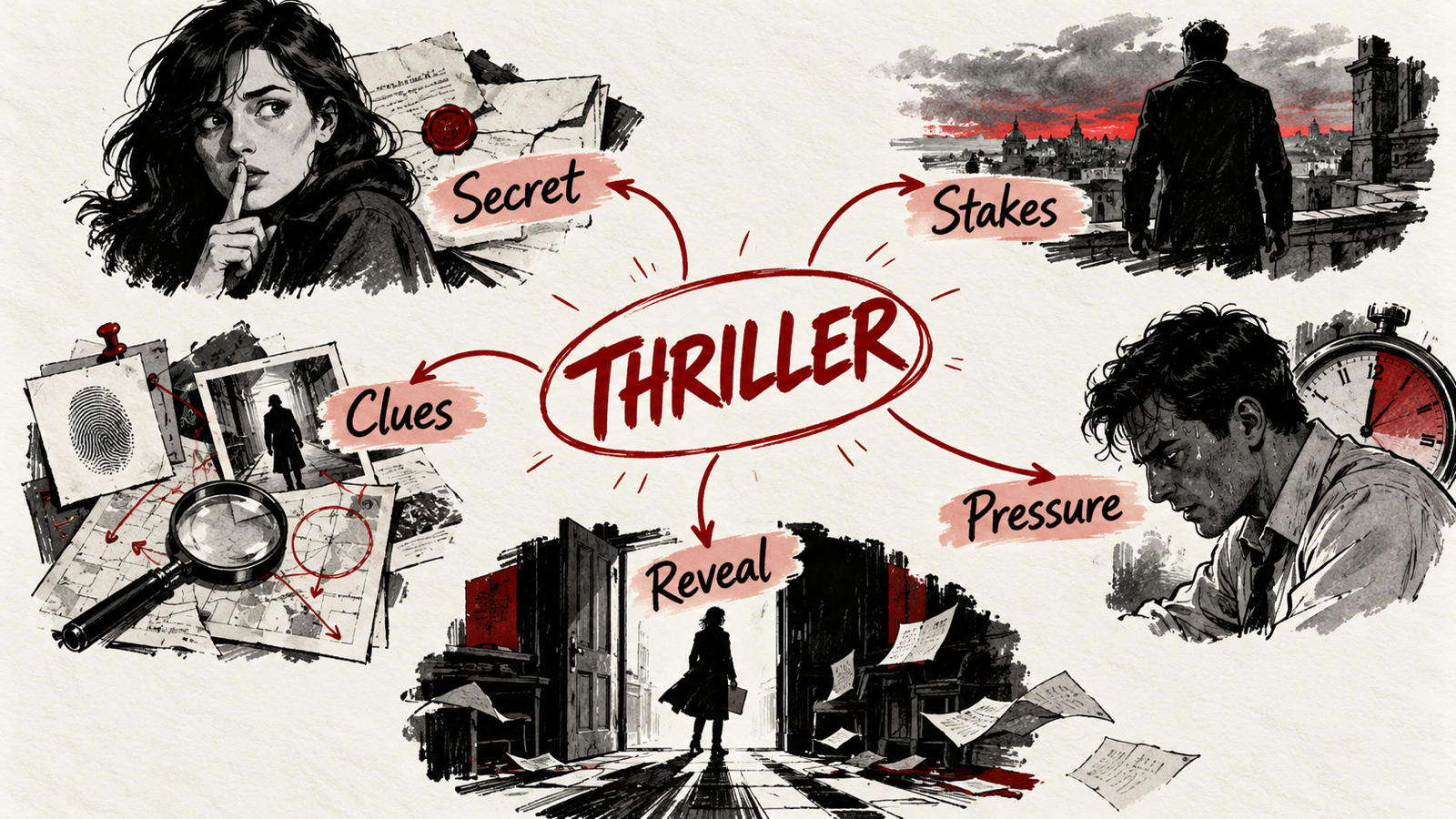
Suspense can come from the audience knowing something the protagonist does not, or from the protagonist holding information we do not yet have. Decide who knows what in each scene. For example, showing an unseen observer before the protagonist notices them creates anticipation. Withholding the observer’s identity creates a different question. Make the gap deliberate.
What should you know about misdirect fairly?
Give the audience a plausible interpretation of real details, then reveal what they missed. A useful reversal changes our understanding without contradicting what the story already showed. Plant clues that survive a second viewing. How to Write Subtext, Plot Twists and Stronger Story Conflict explains how foreshadowing and emotionally meaningful twists support that fairness.
How do you tighten the pressure?
Use deadlines, isolation, reversals, and limited options to maintain tension. Make these obstacles affect the protagonist’s choices. A flawed but driven lead and an intelligent opposing force can sustain the conflict. Supporting characters should have understandable motives, whether they become allies, obstacles, or sources of uncertainty.

How do you make the tension visible and audible?
Use camera distance, movement, light, silence, and sound to support the scene’s uncertainty. A close-up can trap us with a reaction; an empty space can make us anticipate danger. Cinematography for Beginners: How to Build a Purposeful Frame connects those choices to composition and visual intention. Vary the rhythm so the viewer has time to recognise the threat.
How do you earn the ending?
You might end with a revelation, an ironic consequence, a return of the threat, or a moral choice. Choose the ending that resolves your core premise and exposes its emotional cost. The final image should show how this encounter with danger has changed the protagonist’s world.
Frequently asked questions
What is information asymmetry in a thriller?
It is a gap between what the audience and characters know. Showing a threat the protagonist cannot see creates anticipation; withholding its identity creates a different kind of uncertainty.
How can I misdirect the audience fairly?
Present details that support a plausible interpretation, then reveal a different meaning without contradicting those details. The reveal should reward attention and affect the story.
Summary
Define the secret, danger, and protagonist’s reason to act. Control information gaps and plant clues fairly. Escalate consequences toward an earned revelation or choice.
Use My Logline to write your film.