15 Storytelling Tricks Every Director Must Learn
Improve a film story by giving the protagonist a clear goal, creating obstacles, raising personal stakes, and making each scene change something.
By My Logline Editorial
Improve a film story by giving the protagonist a clear goal, creating obstacles, raising personal stakes, and making each scene change something. Use visual storytelling, subtext, setups and payoffs, and controlled pacing to build an emotional journey. These 15 techniques help you review both individual scenes and the complete screenplay.
15 Storytelling Tricks Every Director Must Learn 🔥
- Start with a strong opening.
- The first few minutes decide attention. Begin with curiosity, emotion, danger, or a question.
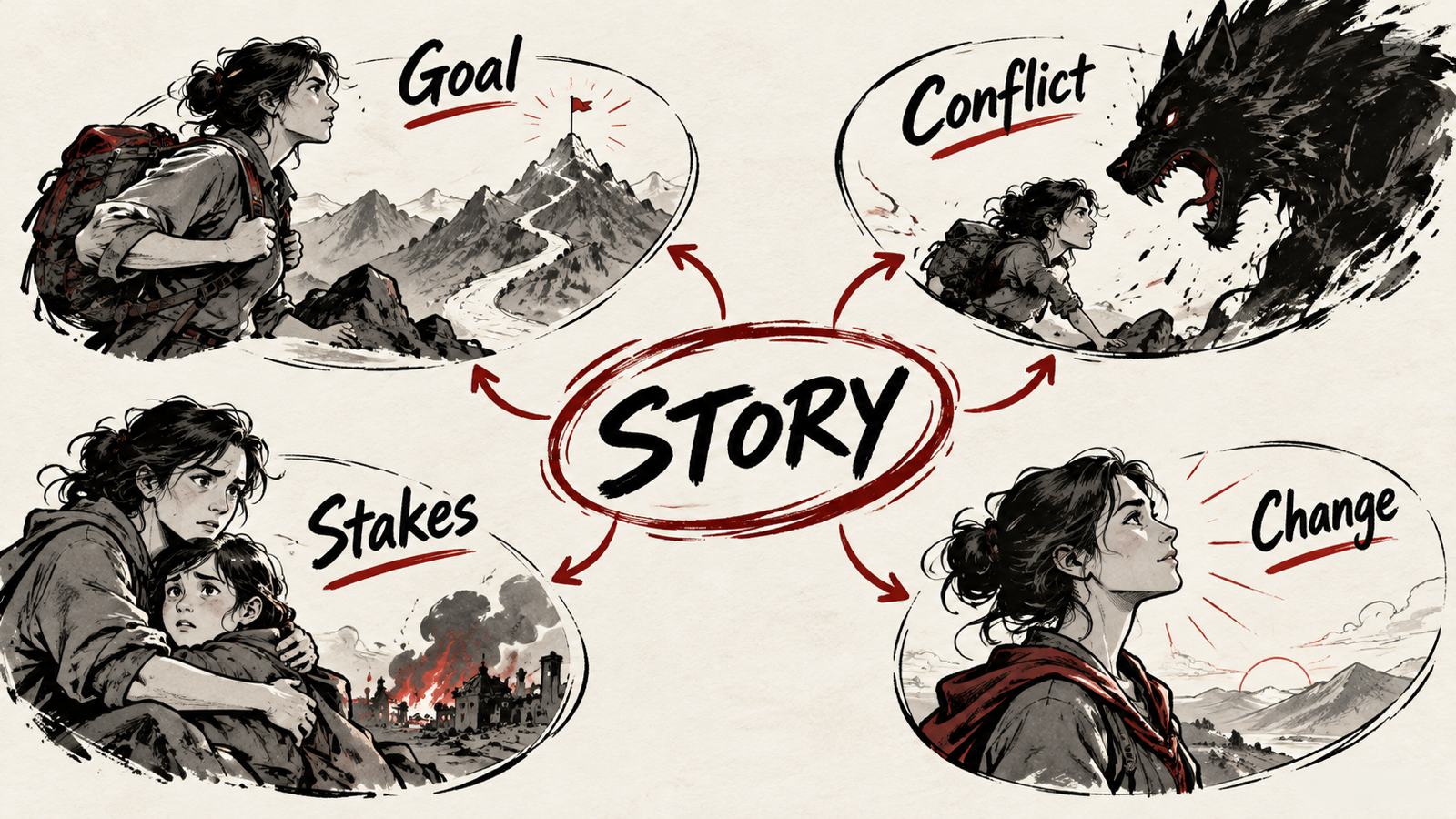
- Give the hero a clear goal.
- The audience should know what the main character wants and why it matters.
- Create obstacles.

-
If success is easy, the story feels boring. Problems create interest.
-
Raise the stakes.
-
Show what will be lost if the hero fails—love, family, respect, life, or future.
-
Use conflict in every scene.
-
Even simple scenes become engaging when two people want different things.
-
Make characters imperfect.
-
Flaws make characters human and relatable.
-
Show growth.
-
The hero should change by the end of the story.
To make that growth visible across the whole film, use How To Convert A Story Idea Into A Full Movie Structure. Place the character’s changing choices at the major turning points so the ending grows out of the journey.
-
Use visual storytelling.
-
Show emotions through actions, looks, silence, and objects—not only dialogue.
Translate that intention into camera choices with 50 Shot Types Every Director Must Master. A reaction shot can reveal the cost of a line, while an insert can turn an ordinary object into meaningful story information.
-
Plant and payoff.
-
Introduce something early, use it meaningfully later. This feels satisfying.
-
Control pacing.
-
Mix calm moments and intense moments to keep audience engaged.
For a feature screenplay, compare those changes in intensity with How To Write Your Script With 120min Runtime. Use the runtime plan as a working guide while checking that the emotional rhythm still feels right for your story.

-
Use subtext.
-
Sometimes characters say one thing but mean another. This adds depth.
-
Surprise the audience fairly.
-
Twists should feel unexpected but still make sense.
-
Build emotional moments slowly.
-
Give scenes time to breathe before big emotional payoff.
-
End with impact.
-
A strong ending stays in the audience’s mind for years.
-
Make people feel something.
-
People may forget scenes, but they remember emotions.
Frequently asked questions
Which storytelling technique should I work on first?
Start with the protagonist’s goal and the central conflict. If those are unclear, stronger dialogue or a clever twist will struggle to hold the story together.
Does every scene need an argument?
No. Conflict can be a hidden desire, an obstacle, a difficult choice, or a gap between what characters know. The scene needs meaningful pressure or change.
Turn stronger story beats into a screenplay with My Logline.